

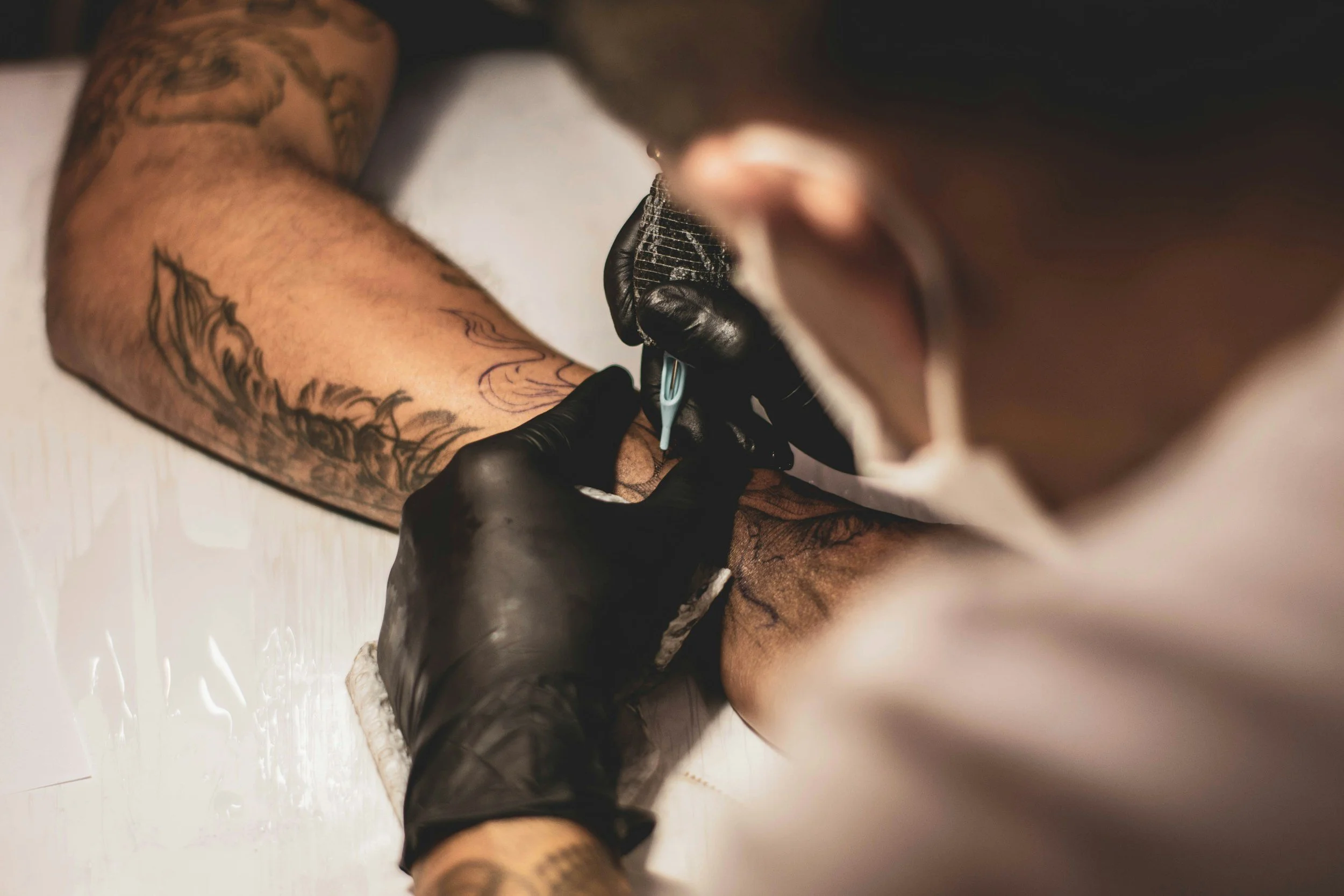
The tattoo Process
prep, appointment, and aftercare
Appointment Prep
Here’s a few things you’ll want to check off before coming in for your new tattoo:
Bring a valid and up to date form of identification.
Make sure you have eaten at least 2 hours before your appointment and drink plenty of water the day of.
Make sure you’re wearing clothes that allow access to the space you will be getting tattooed.
Avoid alcohol a few days before your appointment as well as on the date of.
Avoid the gym the day of your appointment.
Numbing cream and sprays are strongly discouraged unless supplied by the artist. This is for your safety! Off market numbing products can not only damage the integrity of your skin and cause complications with healing, but can cause jeopardize your health.
If you need to rescheduled, be sure to contact the studio or your artist 48 hours before your appointment date. If failed to do so you forfeit your full deposit.
Tattoo
Here’s what will happen before you get in the chair:
When you arrive, head to the front counter to do paperwork.
Your artist will come speak with you shortly after your arrival and get your piece sized out
wait while your artist finishes setting their station up.
When they’re ready for you, they’ll come get you and guide you through the process from there.
Aftercare
Aftercare can be widely different based off the style and size of your tattoo. Make sure to discuss aftercare with your artist and follow each step relentlessly.
Here’s what your standard aftercare looks like:
Always wash your hands before touching your fresh tattoo.
Remove your bandage within the next 2-3 hours after your appointment. We do not recomend keeping the bandage on for more than 24 hours.
Wash the tattoo with lukewarm water and a non-scented antibacterial soap. Let the water run down the tattoo to rinse the area of soap, then pat it dry with a clean paper towel. Do this 2-3 times a day.
Apply a thin layer of ointment such as Aquaphor or A&D after every wash. Do NOT use any antibiotic or petroleum ointments, this can cause the ink to be pulled out.
You may start using a thin layer of non-scented lotions, we recommend Luberderm, after the first week of healing is complete. Natural carrier oils can be used midway through the second week of healing.
Do NOT submerge your tattoo in any water (bath, pool, hot tub, salt or fresh water). This can expose you to bacteria within the water. Soaking a fresh tattoo can also cause ink bleed out and blur in the skin.
Avoid direct sunlight on your fresh tattoo. Sunscreen will keep the tattoo looking fresh through the years, but should NOT be applied within the first 2 weeks of healing.
Over application of ointment/cream can cause irritation bumps on and/or around the tattoo. It’s safer to apply less ointment more often than to suffocate the area.
Scratching your tattoo will effect healing and cause potential scaring.
The first two weeks of the healing process will be on the surface. Once the flaking stage is completed, your skin will remain sensitive underneath the fresh layer of skin.
Your tattoo will take up to 6 weeks to fully settle underneath the skin. Be sure to keep it moisturized and out of sun exposure until after this period of time.
Adhesive Bandages
Saniderm and other adhesive bandages help protect the tattoo from bacteria and other elements for the safest possible healing. This can NOT be used for every tattoo.
Here’s what to expect healing to look like with this type of bandage:
It is not recommend to use Saniderm or any other products like these if you have had allergies to adhesive bandages in the past.
It is normal for plasma and ink to build up and pocket under the adhesive. If there is a large amount of build up, you may remove the bandage after 24 hours.
You may keep the bandage on for 2-5 days. If an excessive amount of blood is visible, the bandage may be removed.
Remove the bandage in a warm shower. Lift and pull a corner in an upward motion (the same as you would when removing a command strip).
Once the adhesive bandage is removed, wash your tattoo and start a normal after care routine as if you would the first week of healing.
Do NOT re-bandage the tattoo after the initial bandage is removed.